I love….. adding unnecessary e’s to words like spicey or babey. ……. it makes the words pop
Unnecessary, redundant, sloppy, visually displeasing, and a sign of not understanding the English language. But yeah, they “pop” I guess. Just like my assumption that you arent average.
oooo!!! buzzkill syndrome, i see. a true example, what a case study.
On using EOs (more informative, less aggravated screeching) [x]
Another, which contains links, because I really do shout about this a lot. [x]
Sadly, in my experience, no matter how much you tell these morons they’re all completely brainwashed by the “I’m so enlightened with crunchy granola superpowers that nothing mother earth provides can hurt me” nonsense that there is little reasoning with them.
I’ve recommended it to many people over the years, mostly elders who hadn’t considered the internet being that useful, and usually they’re like, “aw? A website? No thanks, it’s not necessary”. Which is fine even if internally I was like “plsssss no it’s so good”.
A lot of gen-z are getting into fiber crafting and that is exciting.
So, here’s a little intro
This is the homepage, after making an account
Up on the top right is your notebook, which you’ll probably visit the most because it contains all of the tools for organizing your projects.
That’s your notebook, on the left bar are your various tools. Projects are lined up neatly on the rest of the screen. There’s a Handspun tab for spinners, Stash is where you organize your yarns, uQeue is where you list upcoming projects, Favorites is where you can save and organize your favorite projects/patterns, Needles & Hooks gives you a chart that you can fill in with what you already own, Library is a digital library of patterns and even representations of the physical books that you own.
Each of these can be customized, for example in favorites in there is a place to bundle them, so that if you wanted to say make a bundle of everything you want to knit as Christmas presents throughout the year, you can do that. In Queue you can link the called for yarn and the yarn you are going to use, linked from stash or otherwise, you can make notes on each entry. I will often note whether I need needles and what kind, so that if I drop by the store, the info I need is just a couple of clicks away. There is even a place in the stash to note where you got your yarn and how much it cost.
I’m not going much more deeper into that, but if ya’ll want me to do a post about specific tools let me know.
The most attractive part of Ravelry for me is easily searchable database of patterns.
If you click on the Patterns button at the top left of the homepage, it takes you here.
I typically go straight to pattern browser & advanced search through the link under the search bar.
The great part of this are the filters on the left. You can filter by category of clothing, if and how it’s in your notebook, by craft type, by it’s availability (like whether it’s free, downloadable, or purchased elsewhere), whether or not it has photos (because there are many self-published designers), by attributes such as shape, techniques, texture, and types of colorwork, by age, size, ease, fit, and gender, by weight of the yarn called for, by yardage required, by number of colors used, by pattern source, by needle size, by star rating, by difficulty, by origin of crochet terminology, and by language. There are many more search options after the main filters.
So for example if I had exactly 700 yards of worsted eight yarn in two colors, and I knew I wanted to make a scarf, using bobbles and colorwork, I could search that.
Not only that, but you can customize the filters to combine traits:
I could make my selections and hit advanced where I’ve circled in red and,
specify that I want merino, and cashmere, or silk, but not nylon. I still got 27 matches from that search, but that’s how big the database is.
And the same goes for the yarn tab at the top left of the homepage next to patterns. You can search through pretty much every yarn available, from red heart to indie fiber artists, using similar characteristics to narrow it down.
I hope someone found this useful and if you’re a knitter or crocheter, it’s seriously worth a look. I’m not very active lately, but It’s where I go for inspiration if nothing else.
Thank you for making this. I have a lot of newbie knitters and crocheters who still think Pinterest is the best place to find patterns
I am going to tell everyone a secret, especially people in rural areas.
You…can do a slow social progressive takeover of your local Democratic party, probably. You just need to carve out some time for it.
“Renay”, you say, exasperated, “that sounds fake, but okay.” But I’m here to tell you that if you’re in a rural/red state (or even blue states), you have an excellent chance of infecting the Democratic Party in your area with some straight up radical empathy. And you can do it in sneaky ways. It’s a long game. Here is a list:
1. Find your county Democrats. You may have to start at state level, but eventually you should be able to track down the chair of the county party and find out where and when they meet. Start attending meetings. If they’re not having meetings, hoooooboy. That’s a totally different thing. I spent two years fighting that battle, but if you want help, ping me.
2. At the very first meeting, if the group isn’t using a microphone, bring it up. Ask if the committee can invest in a portable PA system to bring to meetings to help people who have trouble hearing. If they balk (ables often will), don’t worry. Make the request once, and then make the request at every subsequent meeting, kindly, until they get so sick of you they cave and/or start empathizing with you. My position here: who cares why it gets done. Just get it done.
3. Keep going to meetings. Generally county parties meet every month.
4. If there are nametags at meetings, always use them and put your pronouns on them. Yes, even you, cis people. ESPECIALLY YOU.
5. At your third meeting, if the group is using sign in sheets, ask the secretary, or meeting chair if the former is unclear, if the sign in sheets could have a field for pronouns. It’s not about getting people to use it yet—that’s later—we just want it on the template so YOU can use it and set an example. Yes, you can make this request even as a cis person. In fact, it’s probably better that you do because it will cost you less. You can do the emotional labor instead of making trans and enby friends do the labor. This goes back to nametags: if you do it, you create a safe bubble for others to do it, or a social pressure situation for people to do it. Social pressure is sometimes toxic, but we can use it for positive things!
These are Very Simple things you can do to Increase Inclusion in local Democratic spaces and shove them left. This is just the start, too. There’s language scrubbing (kind of advanced because you need to have relationships with the people), requesting the committee invite guest speakers from marginalized communities, and becoming a delegate to the state party annual convention. This is Very Advanced because it generally means travel, but I plan to do it myself because in two years I’m going to make the Arkansas DPA adopt gender neutral language in their platform instead of this “he or she” business.
I mean, maybe you think of going to county meetings and go, “ugh I would rather eat glass” but you can always take an ebook on your phone or something (I do this…soon I will have time to knit again and I’ll be doing that). Take 3-4 hours out of your month and invest it.
What shoves the Democratic Party left? We do. A bunch of people taking small steps in their local communities. And then the candidates coming out of those committees get more progressive and thoughtful, too.
The world doesn’t change just because we want it to. We make it change.
Go do the work.
Additionally: show up to enough meetings and there’s a non-zero chance you could be running things, which is also helpful for the whole slow radicalisation process.
(in NZ if you show up to enough local meetings of a major political party you basically get elected to Parliament if that’s a thing you’re into, you think I’m joking but I’m not really, so I figure for the US ‘running things on a local level’ is totes achievable)
new rule: no one is allowed to say ‘burn it down’ if they’ve never even TRIED to engage with it.
Peak youtube humour is non beauty gurus holding literally anything other than makeup related items in front of the camera the exact same way beauty gurus do. That makes me laugh for 15 minutes straight every single time
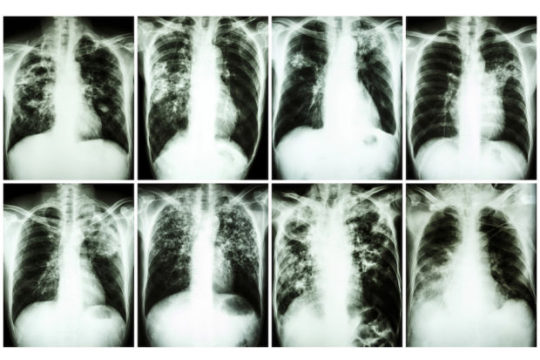
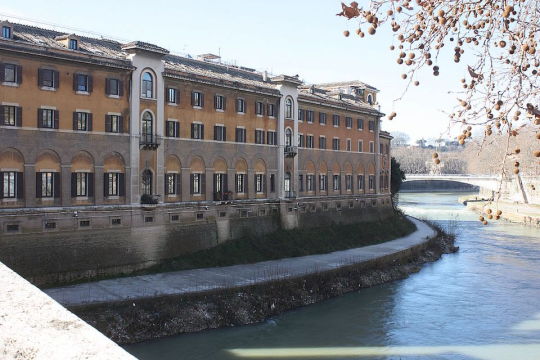
In 1943, a team of ingenious Italian doctors invented a deadly, contagious virus called Syndrome K to protect Jews from annihilation. On October 16 of that year, as Nazis closed in to liquidate Rome’s Jewish ghetto, many runaways hid in the 450-year-old Fatebenefratelli Hospital. There, anti-Fascist doctors including Adriano Ossicini, Vittorio Sacerdoti and Giovanni Borromeo created a gruesome, imaginary disease.
The doctors instructed “patients” to cough very loudly and told Nazis that the disease was extremely dangerous, disfiguring and molto contagioso. Soldiers were so alarmed by the list of symptoms and incessant coughing that they left without inspecting the patients. It’s estimated that a few dozen lives were saved by this brilliant scheme.
The doctors were later honored for their heroic actions, and Fatebenefratelli Hospital was declared a “House of Life” by the International Raoul Wallenberg Foundation.



 Dama Cherepaha