From MC Production, we bring to you Herbology Fridays! Let the lessons Commence!
——-
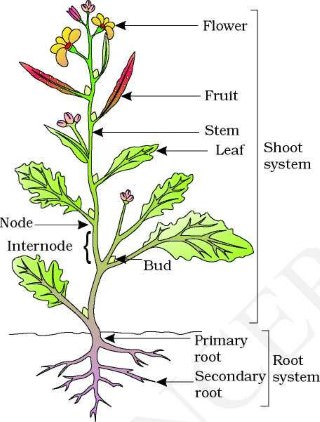
This lesson will be all about the anatomy of plants, namely flowers and herbs that will be used in the craft or for people who are studying medical uses of plants. As these lessons continue, I will be going over different herbs and their uses. But for now, let’s begin with the basics of herbology: Anatomy.
Learning the anatomy of a plant can greatly help any witch who likes to harvest their own plants for their craft! It can also be helpful to know in order to determine if a seller is actually selling you the right item/plant piece.
Let’s start with the end. The Root.
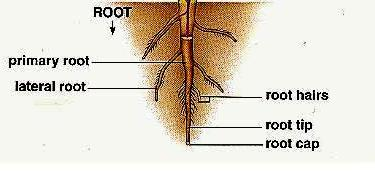
The Root:
The root is the portion of a plant that is typically found in the ground. There are different portions of the root. Here are some different types of roots and parts:
Fibrous: Composed of many spreading branches (EX. Barley Root)
Conical: Tapers from the Crown of the plant (EX Carrots)
Fusiform: Goes both up and down (EX Raddish)
Napiform: Swollen at the base, broader rather than longer (EX Turnip)
Fasciculated: Fibers or branches are thickened
Tuberiferous: Branches assume the shape of rounded knobs (EX Potato)
Palmate: When a knobbed root branches off
Aerial: emitted from the stem and into open air (EX Indian Corn)
Rhizome/Root Stock: prostrate stem on the surface (EX Blood-root, Calamus)
Tuber: Enlargement of subterranean branch (EX Artichoke, Potato)
Cormus: Fleshy subterranean of a round or oval figure (EX Indian Turnip)
Bulb: Abbreviated stem clothed with scales (EX Lilly)
And that’s pretty much it as for the roots. Next, we shall travel to the stem.
The Stem:
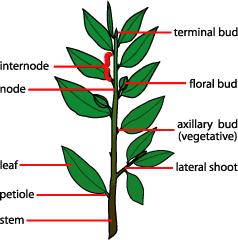
The stem is the portion of a plant which grows in the opposite direction of the roots. Most plants will have a stem. Some plants will seem like they don’t have a stem, but it may just be short or hidden in the ground. Here are some plants that have different types of stems and parts:
Herbs: the stem does not become woody over time, but dies down after flowering
Shrubs: a woody plant near the ground; can range from 1ft to 6ft high
Trees: greater height than that of a shrub; stem unbranched from the ground. The stem of a tree is called a trunk.
Grass: too weak to stand up without support
Stolon: a form of a branch that curves towards the ground, where it may hit the root.
Sucker: rises out of the ground and forms a stem that soon becomes an independent plant
Runner: slender branch sent off from the base of the parent stem
Offset: similar to the runner, but shorter with a tuft of leaves at the end
Spine: short and imperfectly developed branch of a woody plant
Tendril: slender leafless branch capable of coiling
The Leaf:
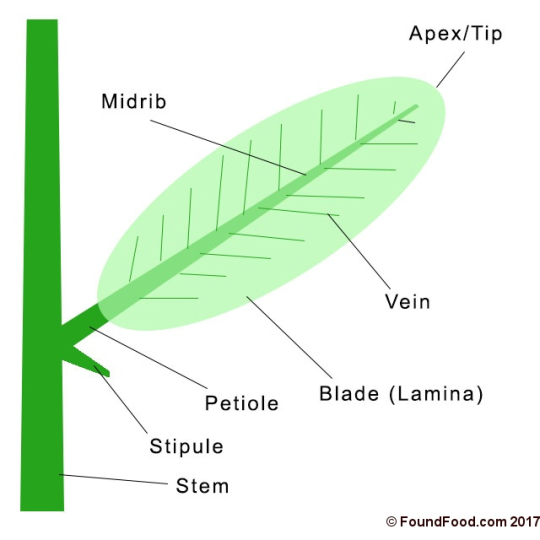
The leaf is a flattened structure of a plant, typically bladelike, and is attached to a stem directly or via a stalk. Here are some different types leaves and parts:
Petiole: the stalk that joins a leaf to a stem
Lamina: a broad expanded blade attached to the plant stem by a stalklike petiole
Sessile: attached directly to its base without a stalk or peduncle; fixed in one place; immobile.
Simple: blade consists of a single piece
Compound: blade is composed of two or three more with a branched petiole
Venation: the arrangement of veins in a leaf
Lanceolate: shaped like the head of a lance; of a narrow oval shape tapering to a point at each end; leaf
Ovate: having an oval outline or ovoid shape, like an egg, leaf
Cuneiform: wedge-shaped leaf
Cordate: heart-shaped leaf
Sagittate: shaped like an arrowhead; leaf
Peltate: shield-shaped; more or less circular, with the stalk attached at a point on the underside
Serrate: having a jagged edge; sawlike
Dentate: having a toothlike or serrated edge
Crenate: having a round-toothed or scalloped edge
Sinuate: having a wavy or sinuous margin; with alternate rounded notches and lobes
Pinnate: having leaflets arranged on either side of the stem, typically in pairs opposite each other.
Pectinate: having very close or narrow divisions(sections) like a comb
Lyrate: having or suggesting the shape of a lyre
Runcinate: pinnately cut with the lobes pointing downward
Palmate: having several lobes (typically 5–7) whose midribs all radiate from one point
Pedate: is a structure that resembles feet, or has a quality of feet
Obovate: ovate with the narrower end at the base
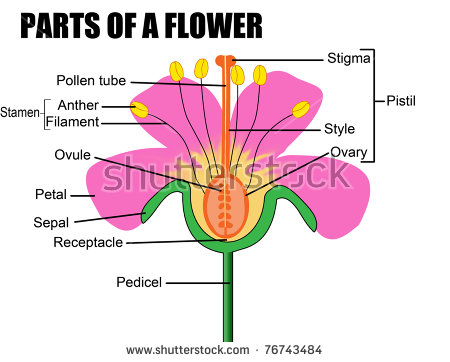
The Flower:
The flower is the seed-bearing part of a plant, consisting of reproductive organs inside the petals. Here are the parts of the flower, there are many forms and types of flowers therefore not going to be explained:
Leaves/Envelopes(perianth): a flattened structure of a higher plant, typically green and bladelike, that is attached to a stem
Calyx(sepals): a whorl that encloses the petals and forms a protective layer around a flower in bud.
Corolla(petals): the petals of a flower, forming a whorl within the sepals and enclosing the reproductive organs.
Stamens: the male fertilizing organ of a flower; consisting of a pollen-containing anther and a filament.
Filament: the slender part of a stamen that supports the anther
Anther: the part of a stamen that contains the pollen
Pollen: a fine powdery substance from the male part of a flower. Each grain contains a male gamete that can fertilize the female ovule
Summit: top, apex; especially: the highest point
Pistil: the female organs of a flower, comprising the stigma, style, and ovary
Ovary: the hollow base of the carpel of a flower, containing one or more ovules
Stigma: the part of a pistil that receives the pollen during pollination
Torus/Receptacle: an enlarged area at the apex of a stem that bears the organs of a flower or the florets of a flower head.
Monoecious: having both the male and female reproductive organs in the same individual; hermaphrodite
Dioecious: having the male and female reproductive organs in separate individuals.
Polygamous: bearing some flowers with stamens only, some with pistils only, and some with both, on the same or different plants.
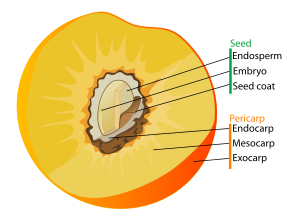
The Fruit:
The fruit is typically the seed-bearing part of a plant. Here are some of the parts of the fruit:
Follicle: a dry fruit that is derived from a single carpel and opens on one side only to release its seeds
Legume/Pod: the long seedpod of a leguminous plant
Drupe: a fleshy fruit with thin skin and a central stone containing the seed
Achenium: any small, dry, indehiscent fruit, as the strawberry, with one seed which is attached to the ovary wall at only one point
Cremocarp: dry dehiscent fruit characteristic of plants that consists of two indehiscent one-seeded mericarps which split apart at maturity and remain pendent from the summit of the carpophore
Caryopsis: a dry one-seeded fruit in which the ovary wall is united with the seed coat
Nut: a fruit consisting of a hard or tough shell around an edible kernel
Samara: a winged nut or achene containing one seed
Berry: any fruit that has its seeds enclosed in a fleshy pulp
Pome: a fruit consisting of a fleshy enlarged receptacle and a tough central core containing the seeds
Pepo: fleshy, watery fruit with numerous seeds and a firm rind
Capsule: dry fruit that releases its seeds by bursting open when ripe
Silique: the long, narrow seedpod splitting open when mature
Cone: the cone of a pine, fir, or other conifers
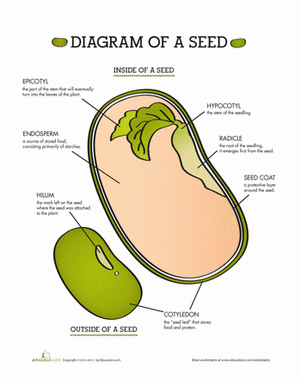
The Seed:
a flowering or fruit-bearing plant’s unit of reproduction, capable of developing into another such plant.
And we (Finally) finished the anatomy of plants! I hope this helped a lot of you out in the long run of your herbalist life in herbology. Please join me when I go over the Medical terms that will probably be heard throughout the rest of my lessons following.

 Dama Cherepaha